Pollination Guide: How to Pollinate Clivia Flowers Successfully
Hand pollinating Clivias is a fundamental skill for breeders and serious enthusiasts who want to create intentional hybrids and produce quality seed. By understanding flower maturity, pollen viability, and proper storage techniques, you can control parentage and significantly improve breeding success.
This guide walks you through the tools, timing, and techniques required for successful Clivia pollination.
A. Essential Tools for Clivia Pollination
Having the right tools ensures precision and prevents contamination:
Alcohol container – For sterilising your brush between crosses
Small sealable container or film canister – For storing pollen capsules
Drying agent – Silica gel or dry rice to absorb moisture
Gelatin capsules – For clean pollen storage
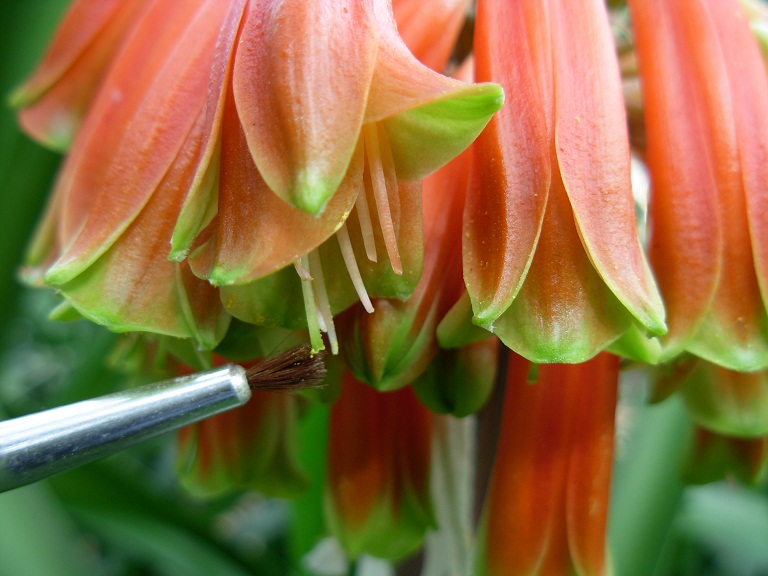
Fine artist’s brush – For collecting and applying pollen
Forceps (tweezers) – For removing anthers
Magnifying glass – To inspect stigma maturity and pollen readiness
Clean tools are critical to avoid unintended cross-pollination.
B. Timing: When Is a Clivia Flower Ready?
Pollination must be done when both pollen and stigma are mature.
✔ Mature Stamens
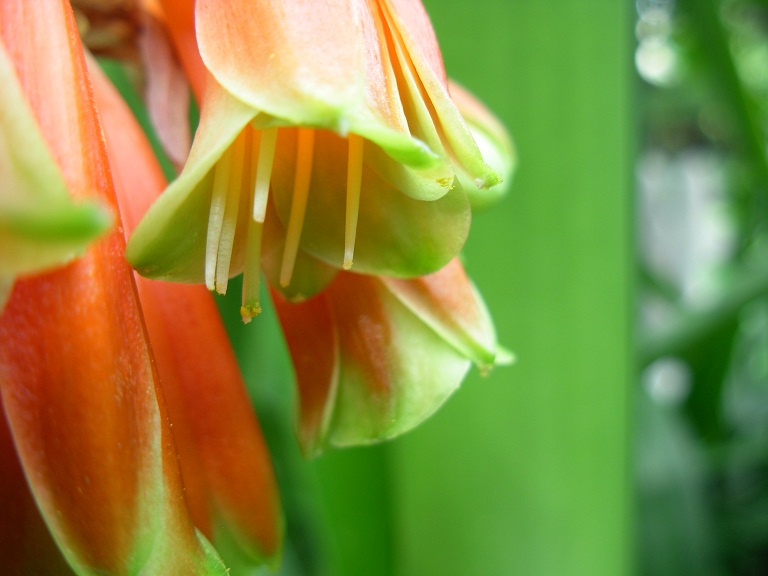
Pollen should be loose, dry, and powdery
Anthers split open naturally when ready
✔ Receptive Stigma
Stigma becomes sticky and moist
It is trifid (split into three small lobes)
If dry, it will not hold pollen
Proper timing dramatically increases seed set success.
C. Step-by-Step: How to Pollinate Clivia Flowers
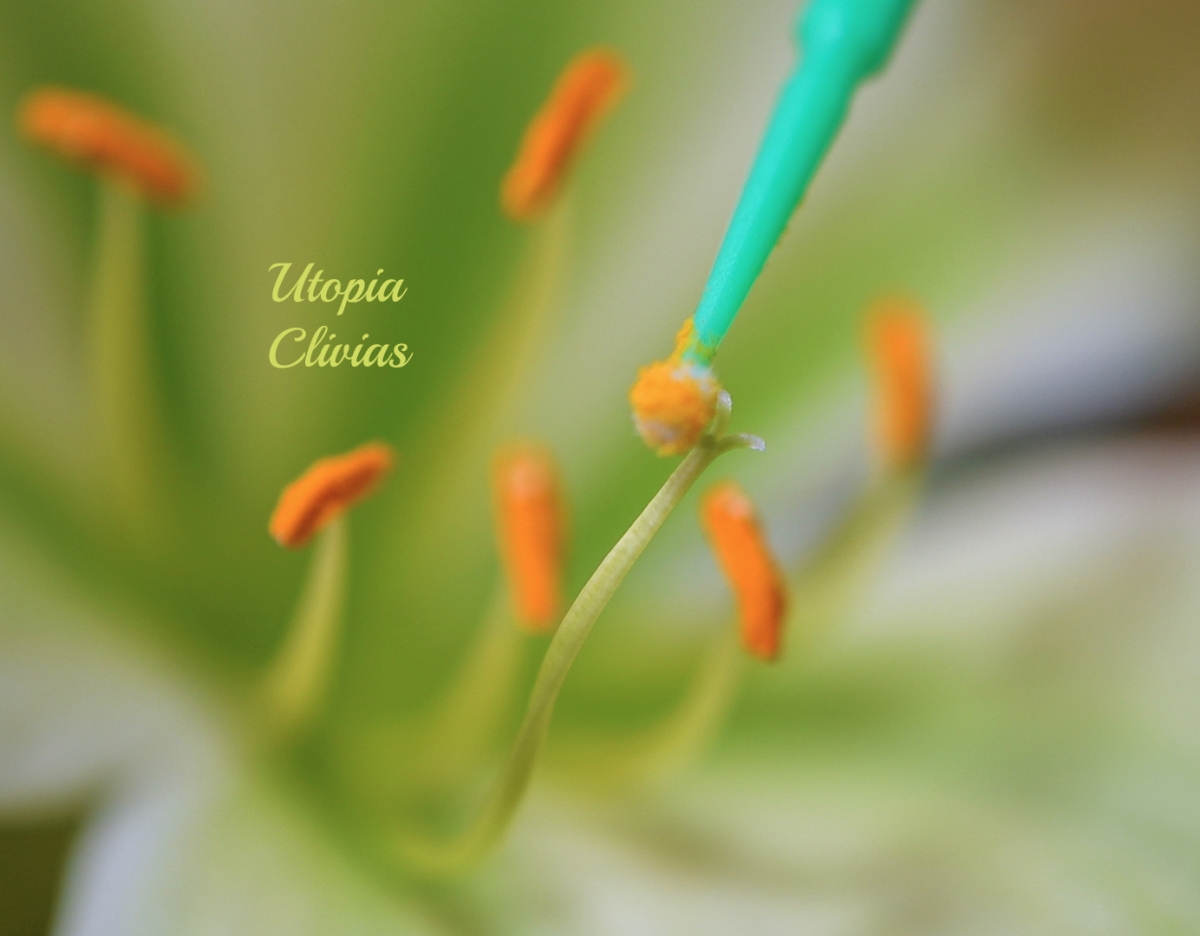
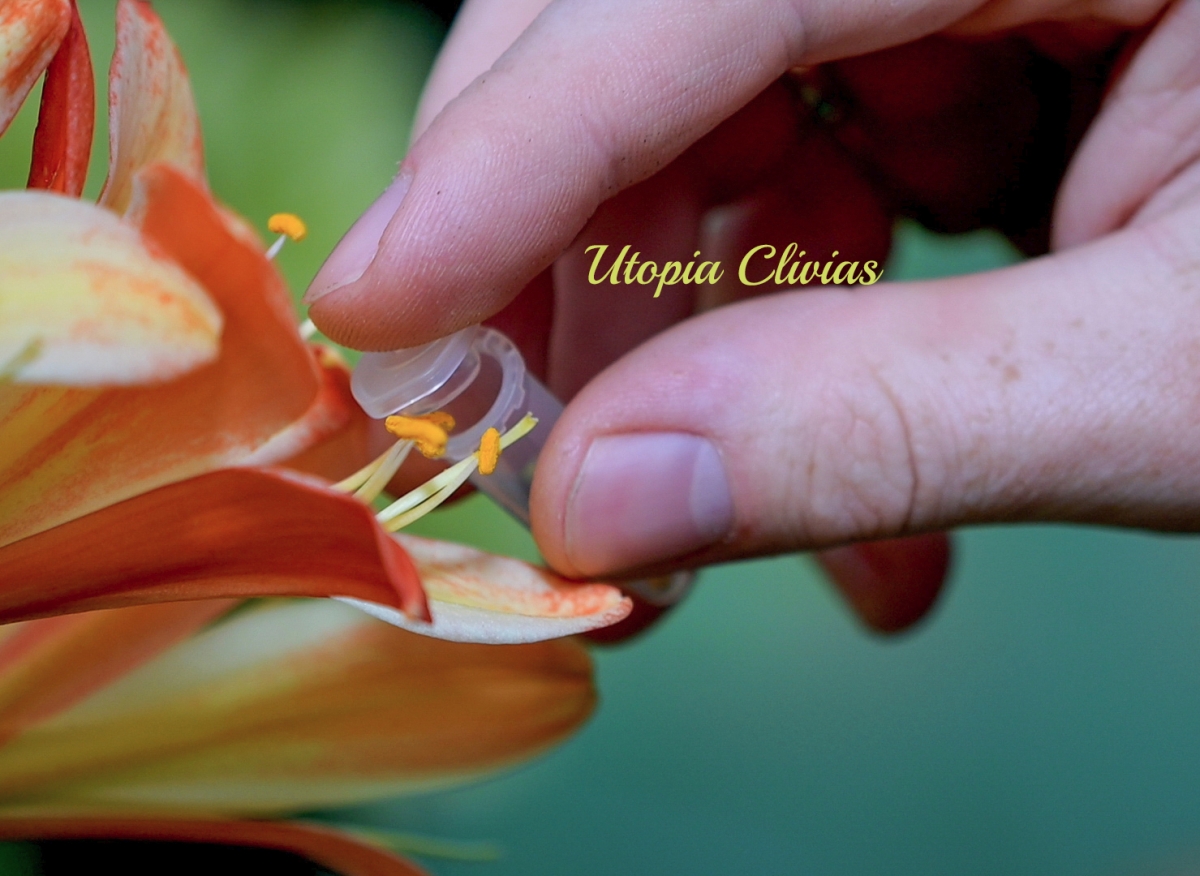
Using forceps, gently remove a mature anther (with or without a small section of filament).
Rub the anther lightly over the sticky stigma of the selected flower.
Alternatively, collect pollen with a fine brush and transfer it to the stigma.
For best results:
Pollinate early in the day when humidity is moderate.
Label each pollinated flower immediately with the parent cross details.
D. What If the Stigma Is Too Dry?
A dry stigma will not accept pollen. You can rehydrate it using a mild sugar solution:
Sugar Solution Formula:
6 teaspoons sugar
1 cup water
Lightly moisten the stigma and wait 5 minutes before applying pollen. The sugar mimics natural nectar sugars and improves pollen adhesion.
E. Collecting and Storing Clivia Pollen
Storing pollen allows you to make crosses later in the season or even years later.
Collection Methods
Option 1:
Use a brush to transfer loose pollen into a gelatin capsule. Multiple anthers may be required.
Option 2:
Collect entire anthers with forceps and place directly into the capsule.
Drying Process
Allow capsules to dry in a cool, dry place for at least 48 hours.
Include silica gel or dry rice to remove moisture.
Storage Conditions
Store in a refrigerator for short-term use.
For long-term storage, deep freeze at –18 to –20 °C.
Properly dried pollen can remain viable for up to 3 years.
Always label capsules clearly with parent plant and collection date.
F. Hygiene & Preventing Unwanted Cross-Pollination
Maintaining strict hygiene ensures breeding accuracy:
Sterilise brushes with alcohol or methylated spirits after each use.
Allow brushes to dry completely before using on another plant.
Return pollen capsules to the freezer immediately after removal.
Never reuse tools without cleaning between crosses.
Cross-contamination can compromise an entire breeding season.
Final Expert Tips for Successful Clivia Hybridisation
Pollinate multiple flowers per cross to increase success rate.
Record every cross in a breeding logbook.
Protect pollinated flowers from heavy rain.
Avoid handling flowers excessively after pollination.
With patience, precision, and good record-keeping, hand pollination opens the door to creating unique Clivia hybrids and expanding your breeding program.